Medical Disclaimer: This article is for informational purposes only and does not constitute medical advice. Do not start, stop, or change any medication or treatment protocol without consulting a licensed healthcare provider. BPC-157 is not FDA-approved for any human therapeutic use.
BPC-157 remains one of the most discussed peptides in the research and consumer wellness communities — and one of the most controversial. A new comprehensive review published in the International Journal of Molecular Sciences in March 2026 provides one of the most thorough assessments to date of where the science actually stands.
The paper, authored by Yuan C, Demers A, Silva-Ortiz V and colleagues, synthesizes decades of preclinical data across multiple tissue types and pain models — while being explicit about the gap between animal research and clinical applicability.
What Is BPC-157?
BPC-157 (Body Protective Compound-157) is a synthetic pentadecapeptide — a chain of 15 amino acids — derived from a protein found naturally in gastric juice. It was originally studied for its protective effects on the stomach lining, but research quickly expanded to other tissues when investigators noted unexpectedly broad reparative effects in animal models.
What the Evidence Shows
Multi-Tissue Healing Effects
The review documents BPC-157’s studied effects across a range of tissue types:
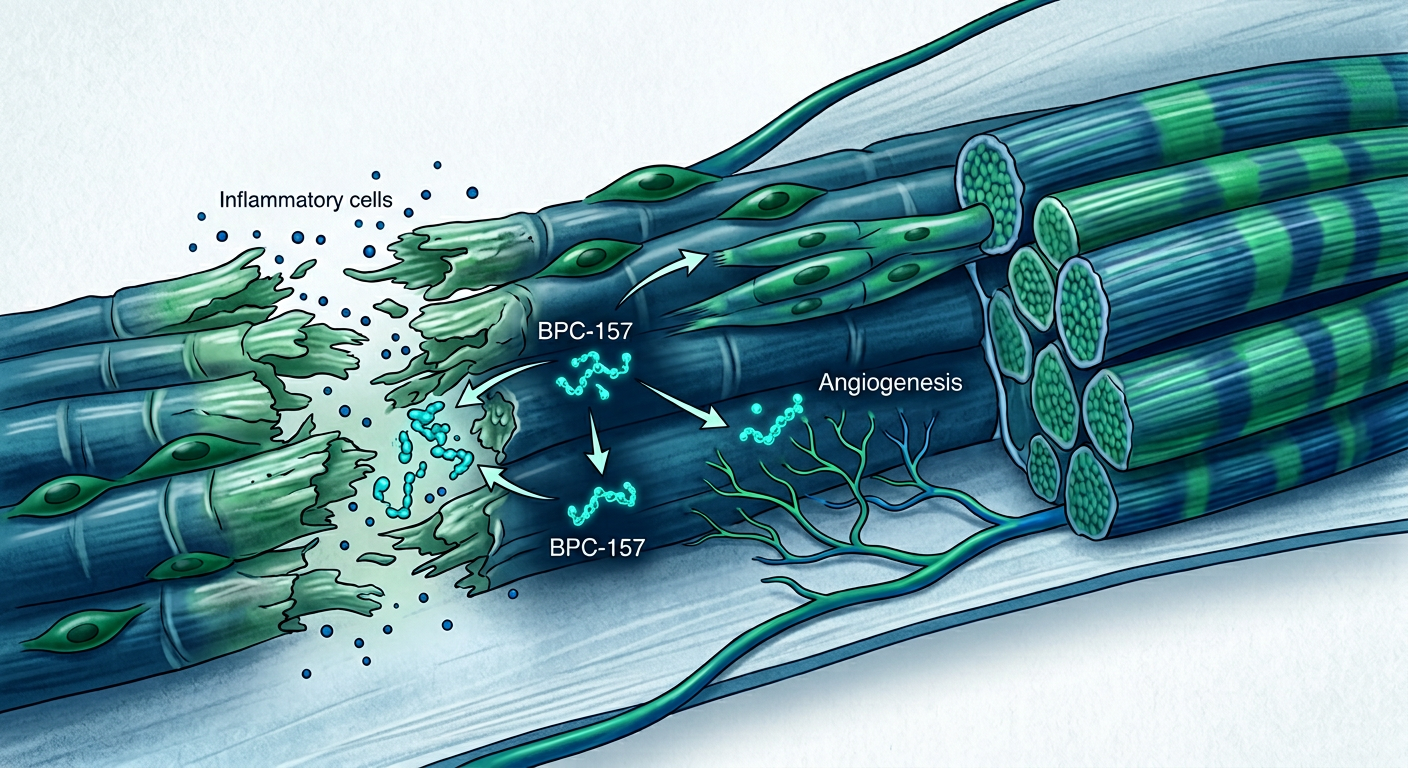
- Muscle and tendon: Animal models show accelerated repair of surgically transected tendons and muscles, with histological evidence of improved collagen organization and faster tensile strength recovery.
- Ligament: Studies in rodents with ligament injuries show reduction in swelling and faster return to functional mobility.
- Bone: Some studies document effects on bone healing and osteoporosis models, though these findings are less consistent across research groups.
- Gastrointestinal tract: The most robust body of evidence covers gut protection and healing — consistent with the peptide’s origin in gastric tissue. Studies document protection against NSAID-induced gut damage, inflammatory bowel disease models, and gastric ulcer formation.
Mechanisms of Action
BPC-157 appears to work through multiple pathways rather than a single mechanism:
- Growth factor modulation: The peptide influences several growth factor systems, including VEGF (vascular endothelial growth factor), which promotes new blood vessel formation — thought to be central to its healing effects.
- Collagen synthesis: Upregulation of collagen production is documented in multiple tissue types.
- Nitric oxide pathways: BPC-157 appears to interact with nitric oxide signaling, which may contribute to both its vascular and anti-inflammatory effects.
Pain Relief
The review’s section on analgesia is particularly noteworthy. The authors document BPC-157’s pain-reducing effects across multiple rodent pain models, including inflammatory, neuropathic, and visceral pain. The proposed mechanisms involve modulation of opioid receptor sensitivity and dopaminergic pathways — different from the mechanism of typical analgesics like NSAIDs or opioids.
This multi-pathway approach to both tissue repair and pain is what drives much of the scientific interest: a compound that might address both the underlying injury and the associated pain could have meaningful clinical utility, if the animal findings translate.
The Human Data Problem
This is where the review is frank about the state of the field.
“Human investigations remain preliminary, with small pilot studies examining musculoskeletal conditions and urinary tract issues,” the authors note. The available human data consists primarily of small case series and pilot studies, none of which are randomized controlled trials with adequate statistical power.
No major adverse effects have been reported in the limited human studies to date — a cautiously positive safety signal, but not yet a validated safety profile.
The authors specifically cite standardization inconsistencies as a concern. Commercially available BPC-157 preparations vary in purity, dosing accuracy, and route of administration across the research and supplement market. This makes it difficult to compare results across studies and creates real risks for anyone obtaining the compound outside of research settings.
What This Review Adds
What’s useful about this paper is its honest framing: the preclinical data is genuinely intriguing, and the safety signal (so far) is not alarming. But “preclinical data is intriguing” and “safe and effective for humans” are separated by a significant gap — one that requires adequately powered, controlled human trials to bridge.
The authors call for “comprehensive evaluation before clinical translation can be recommended,” which reflects scientific consensus on the current state of BPC-157 research.
Looking Ahead
Several investigator-initiated trials of BPC-157 in humans are at various stages of planning or early execution as of 2026, though none yet have published primary outcomes. The peptide’s unique mechanism — distinct from existing approved drugs — means it remains an active area of scientific interest.
Source
Yuan C, Demers A, Silva-Ortiz V et al. “From Regeneration to Analgesia: The Role of BPC-157 in Tissue Repair and Pain Management.” International Journal of Molecular Sciences. March 22, 2026. PMID: 41898733 | DOI: 10.3390/ijms27062876
Stay Informed on Peptide Research
Get the latest peptide research, regulatory updates, and clinical findings delivered to your inbox weekly. No spam — unsubscribe anytime.
No spam. Unsubscribe at any time. See our Privacy Policy.